Replenishing At Sea
Back to Sea Ops

REPLENISHING AT SEA (RAS)

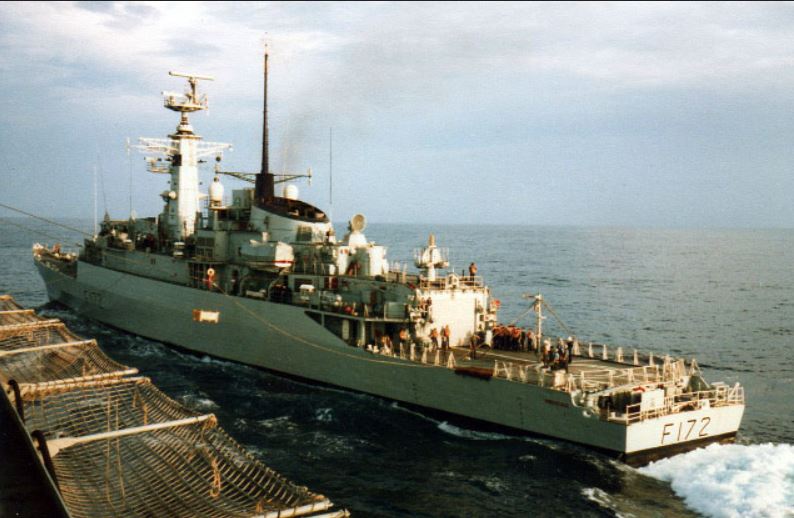
To remain operational for long periods at sea it was essential that HMS Ambuscade was able to replenish fuel, stores, ammunition and people whilst on the move. Some of the methods are shown below. The ship was drilled in an Emergency Breakaway procedure if it came under attack.


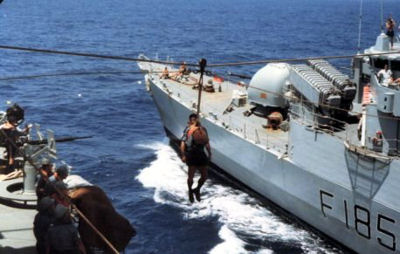
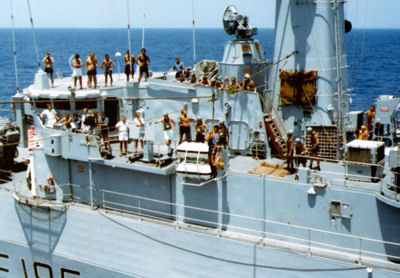
Light jackstay

Light Jackstay Avenger '83  Light Jackstay Avenger '83
Light Jackstay (Personnel) transfer with HMS Avenger 1983 photos © S Griffin


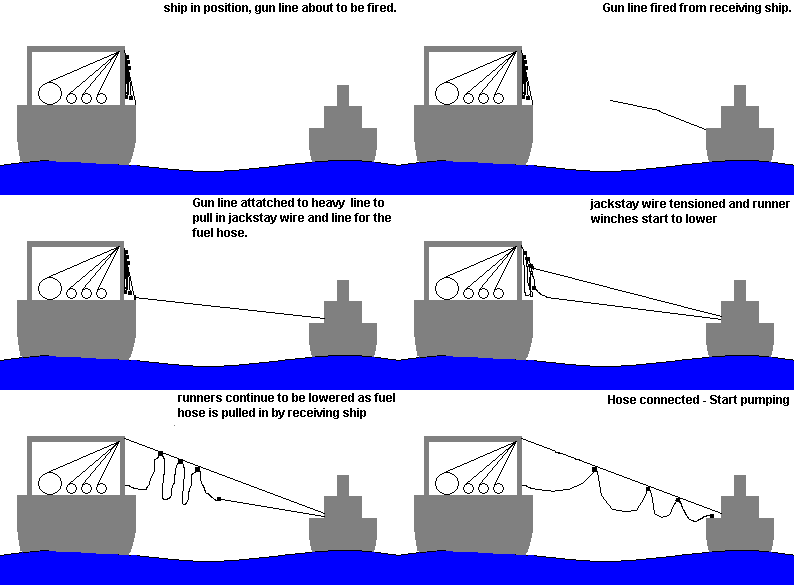
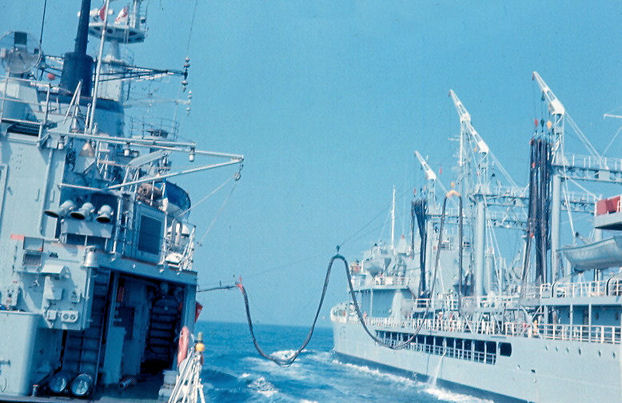
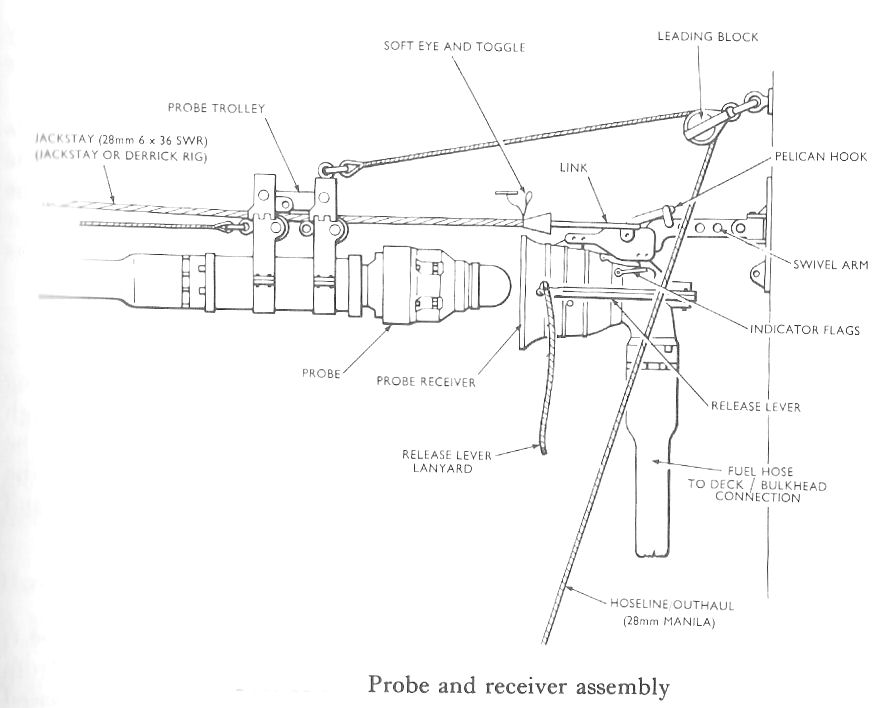
RAS-L (Liquids) QRC
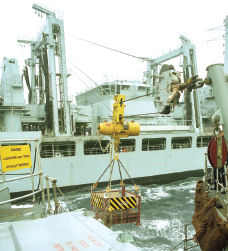
Usually carried out with a Royal Fleet Auxiliary ship or other NATO supply ship. The Fuel probe had a Quick Release Coupling which speeded up the process.

RAS Animation
This diagram is used with the permission of TOOTP (Unofficial RFA Site)

RAS-L
QRC RAS Fuel photo © David Marchant 1979
click to enlarge RAS PROBE QRC


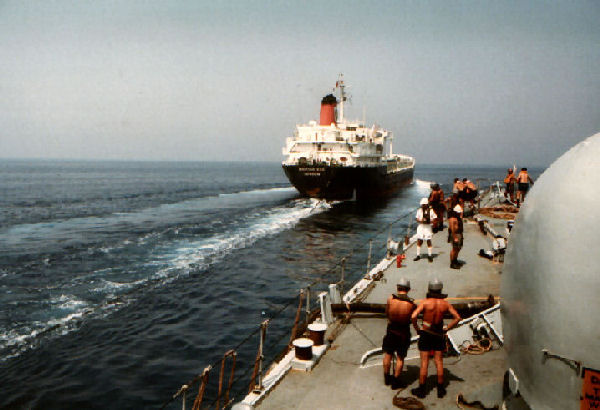
RAS-L (Liquids) Stern

The tanker trails the hose and a marker float astern which is picked up by the receiving ship. this method was usually used by civilian tankers .
Stern RAS
Stern RAS (Fuel) in Med with British Esk 1983photo © S Griffin


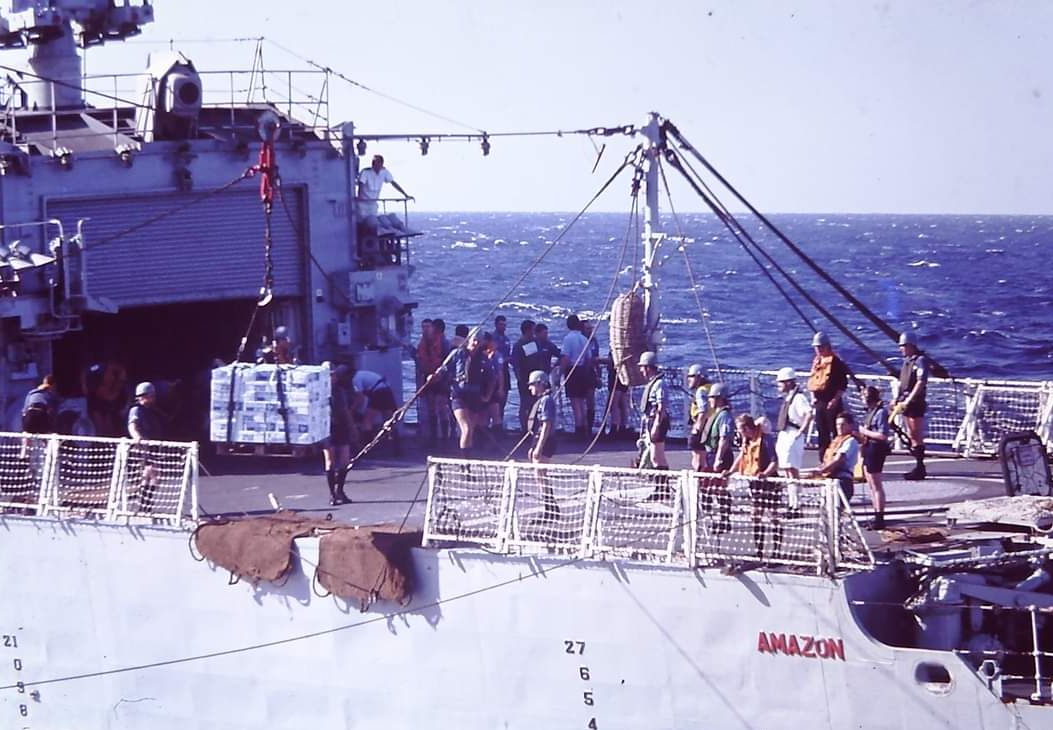
RAS-S (Stores)

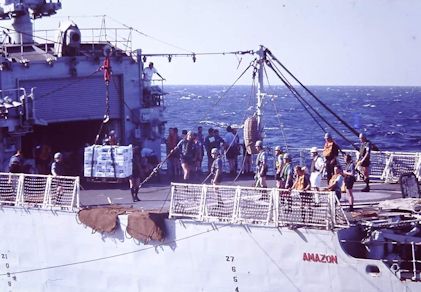
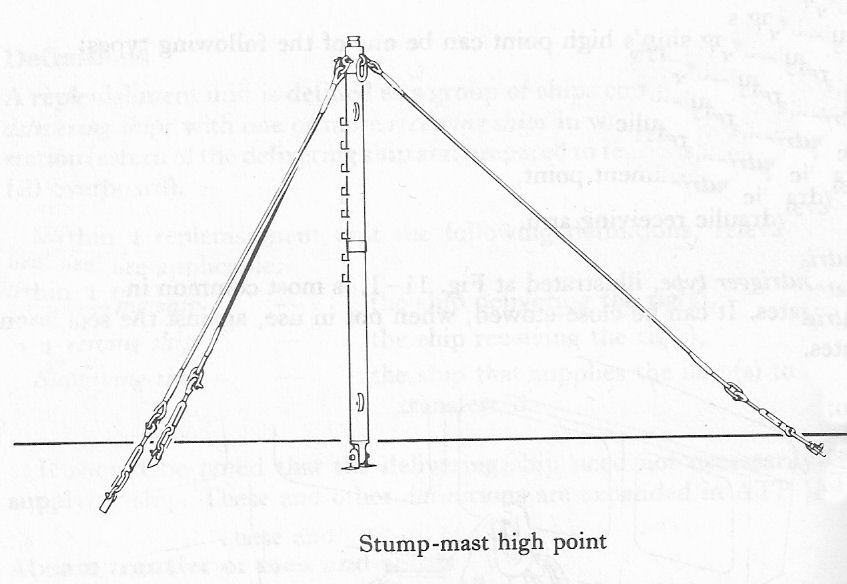
This was carried out using the Heavy Jackstay method. A Stump Mast was erected in the middle of the flight deck providing a high-point, the Rope (Jackstay) was tensioned and stores and ammunition was then transferred between the delivering and receiving ship.
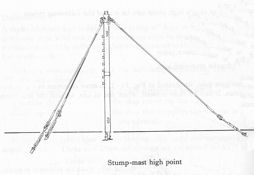
            Click to enlargeHeavy Jackstay RAS


RAS
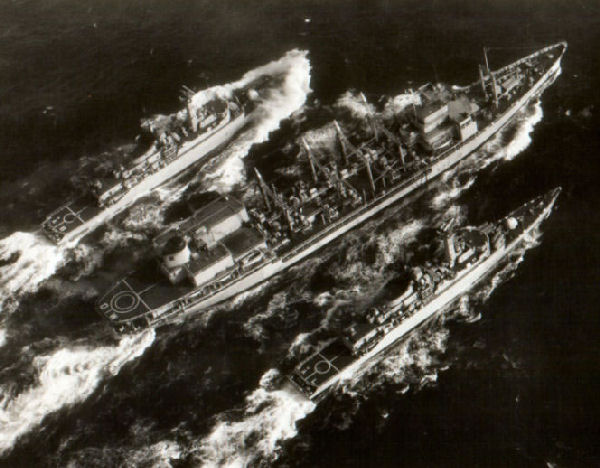
Refuelling at Sea in heavy sea HMS Ambuscade RFA Olwen and HMS Alacrity 1979
photo supplied by Michael Gretton (Capt 1978-1980)


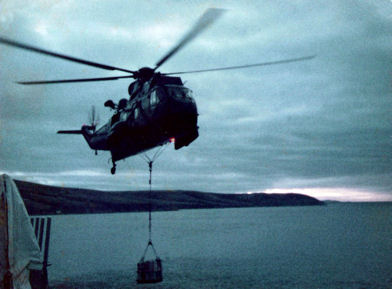
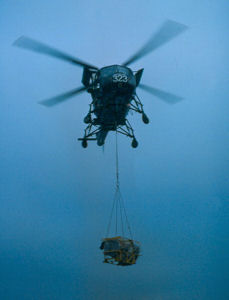
VERTREP (vertical Replenishment)
A quick method of replenishing light stores and mail was using helicoptors
Sea King Vertrep San Falklands war 1982  Wasp VertRep
photos ©Mark Haynes and Dave marchant

top of page